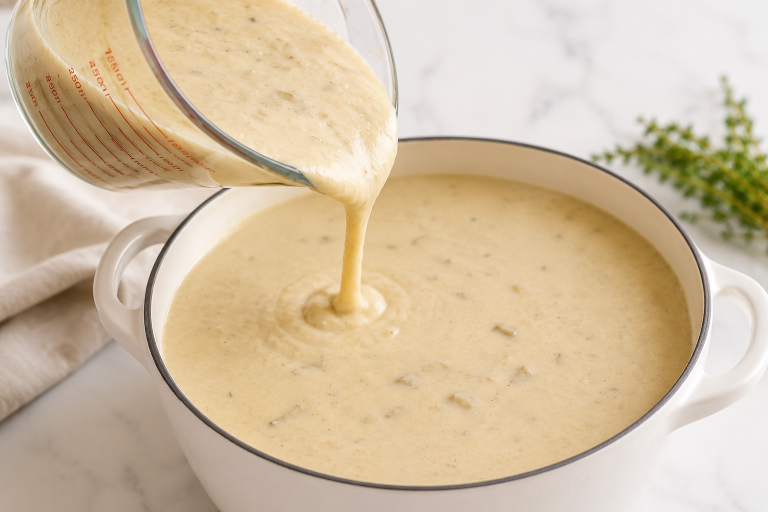
How to Thicken Soup (Without Ruining It)
Some soups just need a little help. Maybe the broth is thinner than you wanted, maybe the texture feels watery, or maybe the soup tastes good but doesn’t have that cozy, hearty finish you were expecting. The good news is that thickening soup is usually simple. The important part is using the right method for the kind of soup you’re making.
A brothy vegetable soup should not be thickened the same way as a creamy potato soup. A bean soup needs a different fix than a cheese-based soup. Once you know which method fits the soup in front of you, it becomes much easier to thicken it without turning it gummy, gluey, or overly heavy.
Why This Works
The best way to thicken soup depends on what is already in the pot. Some soups only need a little extra simmer time to reduce the broth. Others benefit from a slurry, roux, blended vegetables, or mashed beans or potatoes.
This approach works because it focuses on matching the thickening method to the soup itself instead of using one fix for everything. That helps preserve the flavor, texture, and overall balance of the soup.
It also keeps you from overcorrecting. Soup usually thickens more as it simmers and cools, so gradual changes produce better results than dumping in too much starch all at once.
The Best Ways to Thicken Soup
1. Simmer It Longer
This is usually the first method to try. If your soup tastes good and simply seems too thin, remove the lid and let it simmer gently for a little longer. This allows excess liquid to evaporate and naturally concentrates both flavor and texture.
Best for:
- Vegetable soup
- Chicken soup
- Beef soup
- Tomato-based soup
- Bean soup
A gentle simmer is enough. A hard boil can overcook vegetables, shred delicate ingredients, or make creamy soups separate.
2. Mash Some of the Ingredients
If your soup contains potatoes, beans, lentils, squash, or other soft vegetables, mashing part of the soup directly in the pot is one of the easiest ways to thicken it naturally.
You can use:
- A potato masher
- The back of a wooden spoon
- A few quick pulses with an immersion blender
This works especially well for soups that already have starchy or soft ingredients, because you are using what is already there instead of adding anything extra.
Best for:
- Lentil soup
- Bean soup
- Potato soup
- Vegetable soup
- Chowders
Creamy Potato Soup (no heavy cream) is a useful example of potatoes doing the thickening work.
3. Blend a Portion of the Soup
Blending part of the soup and stirring it back in creates a thicker, smoother texture without turning the entire pot into a puree. This is a good middle-ground option when you want more body but still want visible pieces of vegetables, beans, or meat.
To do this, ladle out a portion of the soup, blend it until smooth, then return it to the pot and stir well.
Best for:
- Tomato soup
- Broccoli soup
- Butternut squash soup
- Bean soups
- Creamy vegetable soups
Be careful with potato-heavy soups. Over-blending potatoes can make the texture gluey instead of creamy.
4. Use a Roux
A roux is made by cooking butter and flour together before adding liquid. It gives soup a smooth, rich, structured thickness and is one of the most reliable ways to thicken creamy soups.
Basic method:
- Melt butter
- Whisk in an equal amount of flour
- Cook for 1 to 2 minutes
- Whisk in a little broth or milk until smooth
- Stir it into the soup
Best for:
- Creamy chicken soups
- Potato soup
- Chowders
- Wild rice soup
- Cheese-based soups
A roux is better than sprinkling flour straight into the pot because the flour is cooked first, which prevents a raw flour taste.
5. Add a Slurry
A slurry is a quick mixture of starch and cold liquid that gets whisked into hot soup. It is one of the fastest ways to thicken a soup that is only slightly too thin.
Common slurry options:
- 1 tablespoon cornstarch + 1 tablespoon cold water
- 1 tablespoon flour + 2 tablespoons cold water
Whisk the slurry until smooth, then stir it into the soup a little at a time. Let the soup simmer for a few minutes so the thickening has time to develop.
Best for:
- Quick last-minute fixes
- Brothy soups that need slight thickening
- Creamy soups that already have good flavor but need more body
Cornstarch thickens faster and gives a shinier finish. Flour creates a softer, more traditional texture.
6. Stir In Dairy Carefully
Heavy cream, half-and-half, sour cream, cream cheese, and shredded cheese can all make soup feel richer and thicker, but they need to be used carefully. Dairy adds richness more than true structure, so it works best when the soup already has some body.
Best for:
- Potato soup
- Broccoli cheese soup
- Creamy chicken soups
- Chowders
A few rules matter here:
- Lower the heat first
- Stir dairy in at the end
- Heat gently
- Do not boil after adding it
If a soup is truly watery, dairy alone will not fix it. Build some thickness first with reduction, a roux, mashed vegetables, or a slurry.
7. Add More Starchy Ingredients
If the soup can handle it, adding potatoes, rice, lentils, beans, or small pasta can help thicken it naturally while also making it heartier. This works best earlier in the cooking process rather than at the very end.
Best for:
- Vegetable soup
- Chicken soup
- Bean soup
- Brothy soups that need more substance
This is less of a rescue fix and more of a correction if you catch the issue while the soup is still cooking.
Ingredients & Notes
You do not need all of these for one soup. These are simply the most common thickening options to keep in mind.
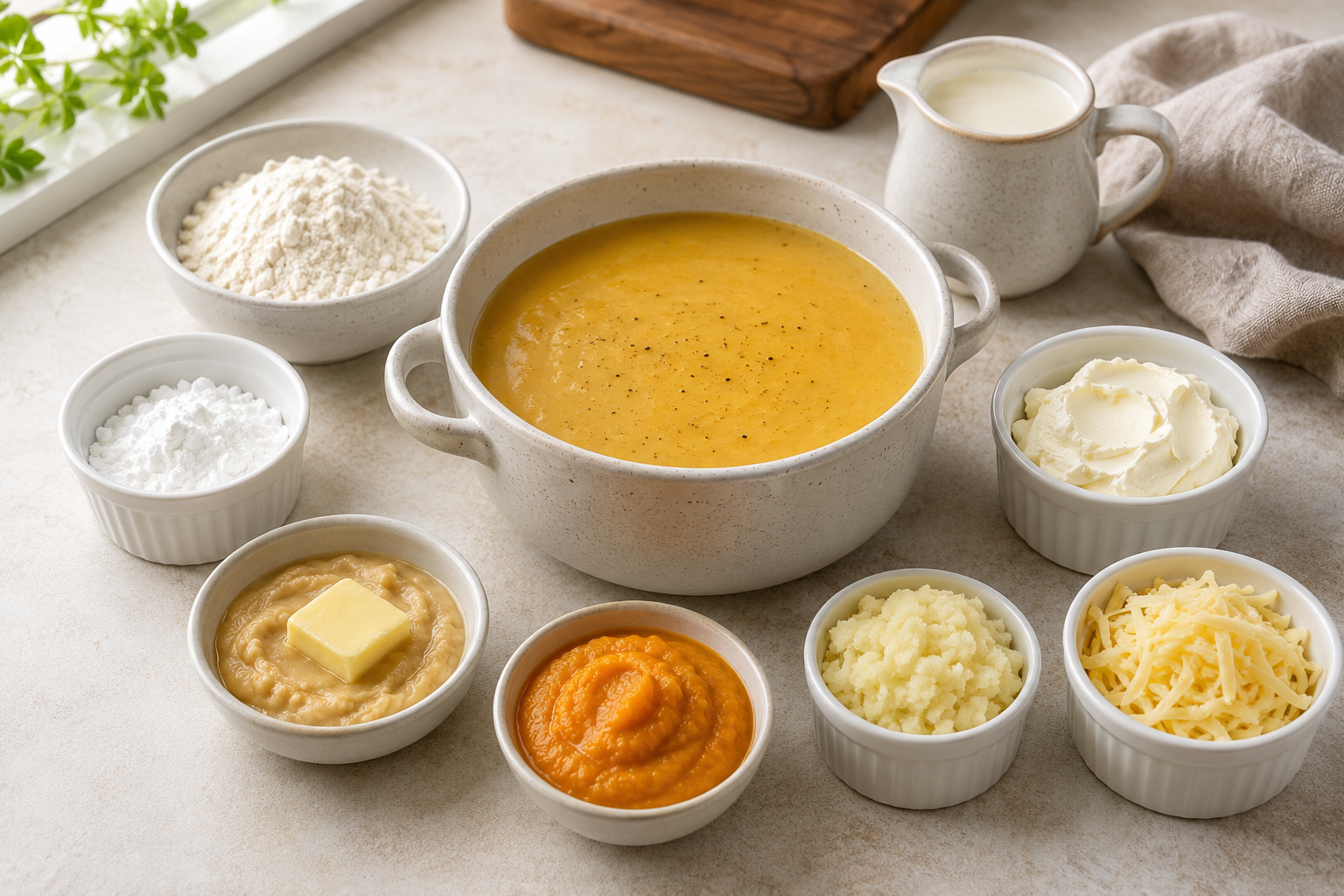
- Flour: Best for roux-based soups and flour slurries. Creates a classic, soft thickness.
- Cornstarch: Good for quick slurry thickening. Works fast and adds a glossy finish.
- Butter: Used for roux-based thickening and adds richness.
- Potatoes: One of the best natural thickeners for creamy soups and chowders.
- Beans or Lentils: Great for naturally thickening soup by mashing or blending part of the pot.
- Heavy Cream or Half-and-Half: Adds richness and body, but should not be the only thickener if the soup is very thin.
- Cheese or Cream Cheese: Helpful in certain creamy soups, but should be added gently and never over high heat.
Equipment
- Large soup pot or Dutch oven
- Whisk
- Wooden spoon
- Potato masher
- Immersion blender or countertop blender
- Ladle
- Small bowl for slurry
How to Thicken Soup
If the soup is only slightly thin:
Start by simmering it uncovered for 10 to 20 minutes. That is often all it needs.
If the soup has beans, potatoes, or soft vegetables:
Mash some directly into the broth or blend a small portion and stir it back in.
If the soup is creamy or chowder-like:
Use a roux or a small slurry for a more structured thickness.
If the soup is rich but still feels loose:
Add dairy at the end for extra body, but keep the heat low.
If the soup needs a bigger correction:
Add a starch-based ingredient like potatoes, beans, lentils, or rice if the soup has enough time left to cook.
Texture & Flavor Tips
- Do not add dry flour or cornstarch directly to the soup. It clumps easily and is hard to fully smooth out.
- Do not boil soup after adding cream, milk, cheese, or sour cream. High heat can cause dairy to separate or turn grainy.
- Do not over-blend potato soup. Potatoes can become sticky and gluey when blended too aggressively.
- Add thickening agents a little at a time. Soup thickens as it cooks and also continues to thicken as it cools.
- Taste after each adjustment. Some methods change not just texture, but richness and overall balance.
For a creaminess-focused guide, see How to Make Soup Creamy Without Cream.
What Not to Do
- A few mistakes can ruin a good pot of soup fast.
- Do not pour dry flour straight into the pot. It usually leaves lumps and a raw taste.
- Do not rely on cheese alone to fix watery soup. Cheese adds richness, but not always stable thickening.
- Do not overcorrect too early. Soup often looks thinner while bubbling and thicker once it settles slightly.
- Do not use the same method for every soup. A brothy soup and a creamy soup should not be handled the same way.
Substitutions & Variations
- If you do not want to use flour, use a cornstarch slurry instead.
- If you do not want to use cornstarch, mash potatoes, beans, lentils, or vegetables already in the soup.
- If you want a gluten-free option, use cornstarch, arrowroot, or naturally starchy vegetables instead of flour.
- If you want a more natural texture, blend part of the soup rather than adding a separate thickener.
- If you want to keep the soup dairy-free, skip cream and use reduction, mashed vegetables, or a starch slurry instead.
Storage & Reheating
- Thickened soups usually continue to thicken as they sit. Once refrigerated, many soups will seem noticeably thicker the next day.
- If the soup becomes too thick after chilling, add a splash of broth, stock, milk, or water while reheating until it loosens to the texture you want.
- Reheat creamy soups gently over low to medium-low heat. Avoid boiling, especially if the soup contains cream, cheese, or sour cream.
Frequently Asked Questions
What is the easiest way to thicken soup?
Usually simmering it uncovered is the easiest first step. If that does not do enough, a slurry is the fastest next option.
Is flour or cornstarch better for thickening soup?
Flour gives a softer, more traditional texture. Cornstarch works faster and creates a glossier finish. The better choice depends on the soup and the texture you want.
Can I thicken soup without flour or cornstarch?
Yes. Mashing beans or potatoes, blending part of the soup, or reducing it by simmering longer are all good ways to thicken soup naturally.
Why did my soup turn gummy?
This usually happens when too much starch was added, or when potato soup was over-blended.
Can I use mashed potatoes to thicken soup?
Yes. Potatoes are one of the best natural thickeners for creamy soups and chowders.
Why did my creamy soup turn grainy?
This often happens when dairy was added over too much heat or the soup boiled after the dairy was stirred in.
Recipe Card Notes
This is not a single recipe method, but a practical guide. The best thickening method depends on the type of soup you are making.
- For brothy soups, start with simmering and reduction.
- For bean, lentil, or potato soups, mash or blend part of the soup first.
- For creamy soups and chowders, use a roux or slurry for a more structured thickness.
- Always make changes gradually. It is much easier to add more thickness than to undo a soup that became too heavy.
Final Thoughts
The best way to thicken soup without ruining it is to work with the soup you already have. Start with the gentlest fix first, then build from there only if needed. A little simmer time, a mashed potato, a small slurry, or a quick blend can make a big difference.
Done carefully, thickening soup should make it taste better, feel heartier, and still keep the texture you wanted in the first place.
To see these ideas in actual recipes, start with the Soup Recipes hub.